
Organize the information through Clustering


The Waterfall Model: A Step-by-Step Execution Guide
The Waterfall execution management method is a straightforward, sequential step-by-step process that gets you from what needs to be built to building it as specified, on budget, and on time. It's structured around distinct, consecutive phases, where each phase depends on the deliverables of the preceding one and corresponds to a specialization of tasks. Waterfall works well for projects with well-defined objectives, and clear documentation requirements, and where changes are infrequent and predictable.
The Waterfall Management Guide
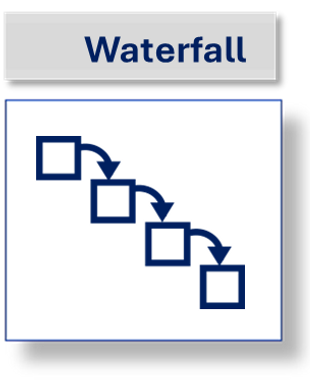
The Waterfall methodology is a powerful project management approach characterized by its linear, sequential design, resembling a cascading waterfall. It's structured around distinct, consecutive phases, where each phase depends on the deliverables of the preceding one and corresponds to a distinct set of dependent tasks.
Requirements
Design
Deploy
Integration and testing
Here’s a breakdown of its core phases:
-
Requirements: The project begins with detailed documentation of the system requirements, directly involving the client or end-user. This phase focuses on collecting all necessary information to understand what the project must achieve.
-
Design: Based on the requirements, the system’s architecture and design are laid out. This step involves deciding on software, hardware, system interactions, and overall architecture to meet the project's objectives.
-
Implementation: During this phase, the actual development or construction of the project components takes place. Developers write code, engineers build systems, and the project starts to take shape according to the predefined design.
-
Integration and Testing: The components developed during the implementation phase are integrated into the system, and extensive testing is conducted to identify and fix bugs. This phase ensures that the system meets the initial specifications and works as intended.
-
Deployment: Once testing is completed and the system is verified to work correctly, it is deployed to the live environment. This could involve installing a new software system for client use or opening a new facility.
After the project has been completed and the system has been deployed, the task transitions to ongoing maintenance where it will reside for most of its lifecycle. This phase involves regular updates, bug fixes, and possible enhancements to ensure the system continues to meet users' needs effectively.